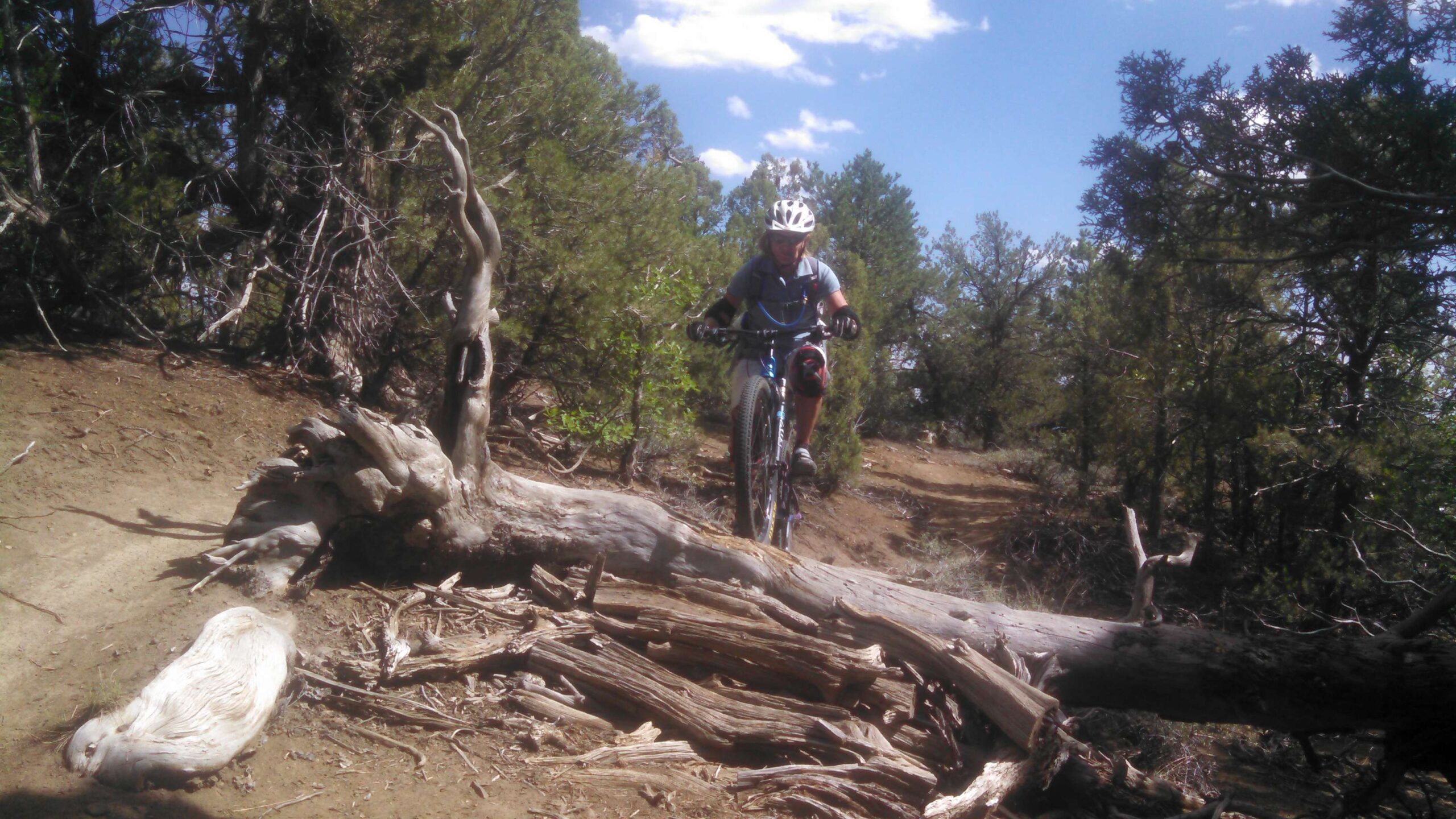
Don't pull a Gene! Balance is the key to a happy life, but it is a constant battle for most of us. We become nearly obsessed with one or two things (a hobby and/or our career) and neglect important areas of our lives. I see this a lot with mountain bikers, especially those who race. [...]
To make themselves feel comfortable and confident, top competitors in many different sports utilize a personalized pre-race (or pre-game) routine to help them perform at their best. Routines are not the same as rituals, a routine is a structured plan designed to help you reach your optimum performance while a ritual relies on superstition to control your performance (things like not washing your “lucky” socks or stepping on a crack). In other words a routine helps you take control of your performance while rituals assume fate (not you) will control your ride/race. This was originally written for a downhill mtb team I coached but works equally well for all mountain bike riding and xc racing. A big key goal is to eliminate thoughts that will distract you and put youself in the poper mind state to ride with confidence! I have added a night before the ride/race routine to eliminate most causes of worry and allow you to get some sleep. Your pre-race routine should make you comfortable in strange/new surroundings, build your confidence, eliminate stress, and prepare you to do your best. I have listed many common practices to get you started but you must experiment and find out what works best for you. Use this as a rough outline adding what works and getting rid of what doesn’t through experimentation. A well thought out routine will make you confident at the start while your competition worries about their run and wonders why you are so confident.
When it comes to riding mountain bikes, perfection is not an option. Whether you are a top professional racer or a green-newbie, you will make mistakes out there on the track or trail every time you ride. How you recover from these mistakes – primarily mentally – will be vital to your performance, and perhaps more importantly, to your level of enjoyment while finishing the remainder of the ride. Our goal, after we make a mistake, should be - as quickly and efficiently as possible – to mentally deal with the mistake, and then forget about it, and get back into our flow, or “zone”, as its been called, with clear and correct mental focus and proper physical technique. Even the top racers in the world make mistakes. Whether you are a downhill racer or not, the following applies to you: What’s the difference and how do we not let mistakes affect us negatively further into the ride? First, I’m very careful (sometimes hesitant) about dealing with the mental aspects of riding when it comes to other riders before I get to know them. Spotting bad technique and giving advice on how to correct it is usually fairly easy and nearly black and white. But because we all come from different places, with different motivations, different successes and failures, etc, the mental aspect and what motivates each individual rider can be a touchy subject. (I have seen riders get so angry, that they did literally will themselves over obstacles that were giving them problems. It worked in that case. But as I’ll explain, that’s probably not the best mental technique for most of us.) However, anger and frustration WILL creep into your riding. The only way out is to DO THINGS RIGHT – maintain proper form and technique, maintain mental clarity and focus. But like lots of other things, we know what we SHOULD do, but, often, its difficult to do these things - especially under the stresses we encounter out on the trail. And sometimes this does require us to be (or become) mentally tough. How do we become mentally tough? Every rider is different, but read the article by Gene on this website, titled “Are You Tough? (part 1 http://betterride.net/?p=476 and 2 http://betterride.net/?p=470)” for more techniques that will help you in these situations. Just like all physical techniques, we need to practice this (these) until they become automatic. Like most of the physical techniques of riding the bike, these aren’t complicated, yet they can still be quite difficult to pull off out on the trail. Use that mental imagery to work these into your program, and then, fortunately (Ha Ha) – now matter who you are - you’ll have plenty of opportunities to use them out on the trail!
BetterRider of the Month! A new feature I am adding to introduce you to some our students that I am inspired by! The July 2011 BetterRider of the Month is Jen Hanks. Jen took a camp from us last October in Fruita and her life has changed a lot in the last 9 months. A few months after the camp Jen faced a huge challenge and overcame it in stride. Her courage, passion and dedication to the sport inspire me. I am very proud of my cycling achievements, my career, and most recently my blog about my story as an athlete with cancer. I also hope to show that a return to high-level athletic performance is possible after breast cancer treatment. Look for my return in 2012! I will be checking her blog for updates and look forward to hearing of her continued successes both on and off the bike!